EV vs Petrol Cost India 2026: Real Monthly Cost Comparison That Actually Matters
By AirFinac.com
Electric vehicles vs petrol cars—it’s no longer just about innovation or trends. In 2026, the real concern for buyers is simple: which option saves more money every month?
With petrol prices hovering between ₹95–₹105 per litre and electricity tariffs remaining stable at ₹6–₹9 per unit, the EV vs petrol cost India comparison has become a purely financial decision for most consumers.
In this detailed guide, we break down cost per km, monthly expenses, 5-year ownership cost, maintenance savings, and charging costs—using real Indian data—so you can make an informed choice.
🚗 Cost Per Kilometer: EV vs Petrol Cost India
The most effective way to evaluate the EV vs petrol cost India debate is by comparing running cost per kilometre.
Petrol Car Running Cost
- Average mileage: 15 km/litre
- Petrol price (2026 avg): ₹100/litre
👉 Cost per km = ₹100 ÷ 15 = ₹6.6 per km
Electric Vehicle Running Cost
- Average consumption: 0.15 kWh/km
- Electricity rate: ₹8/unit
👉 Cost per km = 0.15 × ₹8 = ₹1.2 per km
✅ Result: EVs are nearly 5 times cheaper per kilometre, making the EV vs petrol cost India comparison clearly favourable for electric vehicles.
💸 Monthly Running Cost Comparison (Real Example)
Let’s consider a typical urban driver:
- Monthly driving: 1,000 km
Petrol Cost
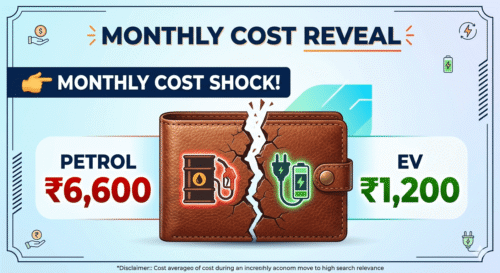
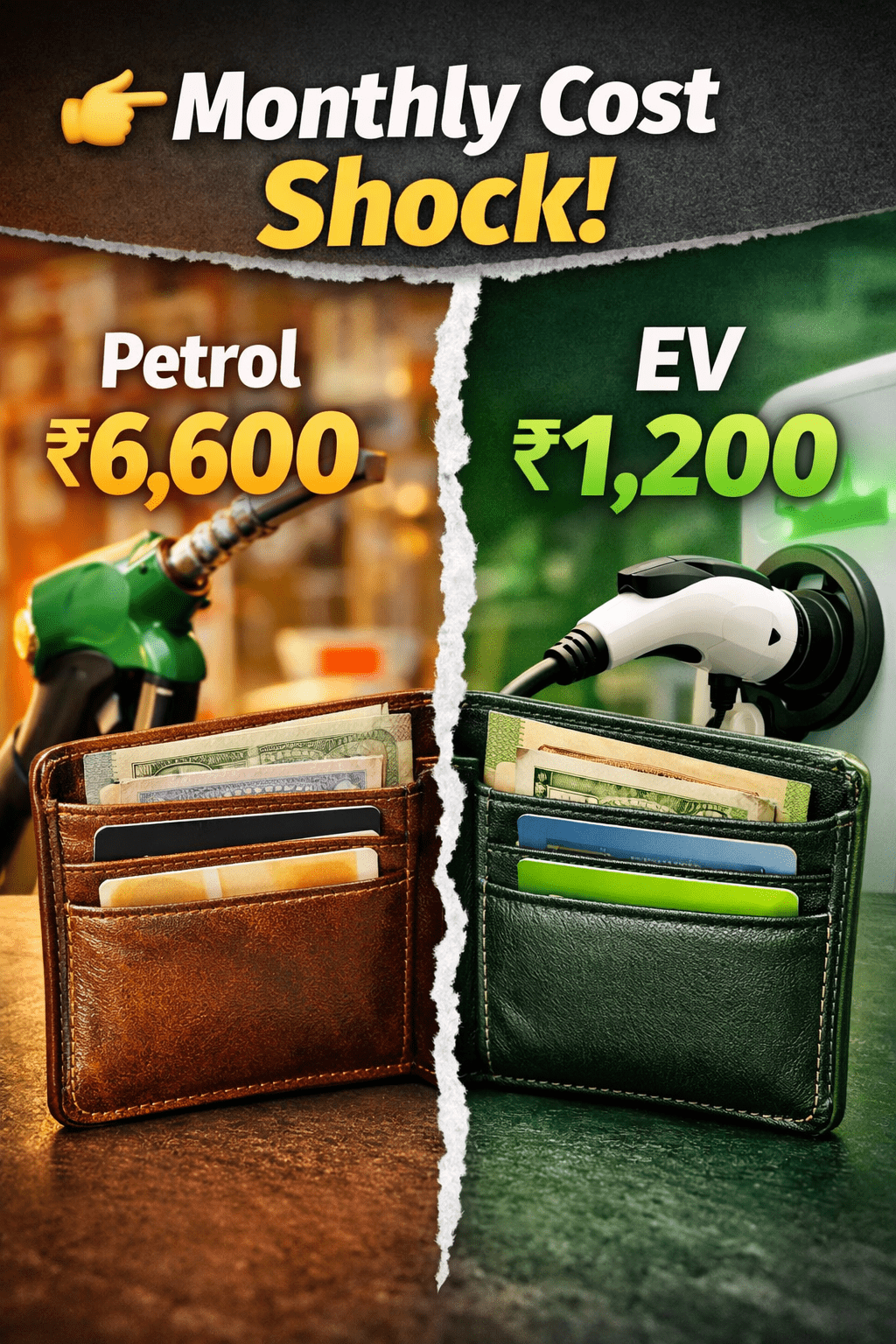
₹6.6 × 1,000 = ₹6,600/month
EV Charging Cost
₹1.2 × 1,000 = ₹1,200/month
💰 Total Savings
- Monthly savings: ₹5,400
- Annual savings: ₹64,800
- 5-year savings: ₹3.2 lakh+
👉 This clearly highlights why the EV vs petrol cost India analysis strongly favours EVs for daily commuting.
📊 5-Year Ownership Cost Breakdown
A proper EV vs petrol cost India comparison must include total ownership cost, not just fuel.
Fuel / Charging Cost (5 Years)
- Petrol: ₹3,96,000
- EV: ₹72,000
👉 Savings: ₹3,24,000
🔧 Maintenance Cost Comparison
Petrol Cars Require:
- Engine oil servicing
- Clutch replacement
- Exhaust repairs
- Fuel system cleaning
- Timing belt changes
EVs Do Not Require:
- Engine oil
- Complex gearbox
- Exhaust system
Estimated 5-Year Maintenance
- Petrol: ₹60,000 – ₹1,00,000
- EV: ₹30,000 – ₹50,000
👉 EVs offer 30–50% lower maintenance, strengthening the EV vs petrol cost India advantage further.
💰 Upfront Cost: Is EV Expensive?
EVs usually cost ₹1–2 lakh more upfront compared to petrol cars. However, the price gap has narrowed due to:
- State subsidies
- Road tax exemptions
- Lower registration charges
- GST benefits (5% vs 28%)
👉 When considering total savings, the EV vs petrol cost India gap typically balances out within 3–4 years.
⚡ Charging Cost: Home vs Public
Home Charging (Most Affordable)
- Cost: ₹6–₹9/unit
- Full charge (40 kWh): ₹240–₹360
- Range: 250–300 km
👉 Cost per km: ₹0.8 – ₹1.4
Public Fast Charging
- Cost: ₹15–₹25/unit
- Full charge: ₹600–₹1,000
👉 Still cheaper than petrol, but less economical than home charging.
📈 Fuel vs Electricity Price Trend
- Petrol prices: volatile, linked to global crude
- Electricity tariffs: relatively stable
👉 Over time, this trend makes the EV vs petrol cost India comparison even more favourable for EV owners.
🔋 Battery Replacement: What You Should Know
- Warranty: 8 years / 1.6 lakh km
- Gradual degradation
Replacement Cost:
₹4–₹8 lakh (rare within warranty)
👉 Most owners will not face replacement costs in early years, keeping the EV vs petrol cost India equation positive.
🔄 Resale Value Comparison
- Petrol cars: stable resale history
- EVs: growing resale demand
Demand is increasing due to:
- Lower running cost
- Rising fuel prices
- Improved battery trust
🌱 Environmental Advantage
EVs produce zero tailpipe emissions and offer lower lifetime emissions compared to petrol vehicles, even with India’s current energy mix.
⚠️ When Petrol Still Makes Sense
EVs may not suit everyone. Petrol cars are better if:
- Driving is below 6,000 km/year
- No home charging access
- Frequent long-distance travel
- Budget constraints upfront
🔍 Quick Answer (Featured Snippet)
Is EV cheaper than petrol in India?
Yes, based on the EV vs petrol cost India comparison, EVs can save over ₹3 lakh in 5 years.
EV cost per km in India?
₹1–₹1.5/km
Petrol cost per km?
₹6–₹7/km
Do EVs need less maintenance?
Yes, significantly lower.
🏁 Final Verdict: EV vs Petrol Cost India
If you:
- Drive regularly
- Have access to home charging
- Plan long-term ownership
👉 EV is clearly the more economical option
The EV vs petrol cost India advantage becomes stronger with:
- Higher usage
- Increasing fuel prices
- Longer ownership duration
📊 The conclusion is clear—EVs are not just environmentally better, but financially smarter for Indian drivers in 2026.
📢 Call to Action
Planning to buy your next car?
Explore more EV insights, cost comparisons, and smart financial guides on AirFinac.com.
FAQ’s
- Is EV cheaper than petrol in India?
Yes, based on the EV vs petrol cost India comparison, electric vehicles are significantly cheaper for regular users due to lower running and maintenance costs.
- What is the cost per km for EV vs petrol cars in India?
EVs typically cost around ₹1–₹1.5 per km, while petrol cars cost ₹6–₹7 per km, making the EV vs petrol cost India difference substantial for daily driving.
- How much can I save monthly with an EV in India?
On average, users can save ₹4,000–₹6,000 per month depending on usage, which is a key highlight in any EV vs petrol cost India analysis.
- Do electric cars have lower maintenance costs than petrol cars?
Yes, EVs have fewer moving parts and no engine oil, resulting in 30–50% lower maintenance costs compared to petrol vehicles.
- What is the 5-year cost difference between EV and petrol cars?
EVs can save over ₹3 lakh in 5 years due to lower fuel and maintenance expenses, making them a cost-effective long-term option.
- Is EV charging cheaper than petrol in India?
Yes, home charging costs are significantly lower than petrol expenses, even though public fast charging may be slightly higher but still economical overall.
- Should I buy an EV or petrol car in 2026?
If you drive regularly and have access to home charging, EVs are the better financial choice; otherwise, petrol cars may still suit low-usage drivers.
📌 Disclaimer
All calculations are based on average Indian data and may vary by location, tariffs, and driving patterns. This content is for informational purposes only.